
 In the market for a new car but worry that your iffy credit score will put the brakes on getting a good deal? Take heart: A new report shows that you might be able to snag those keys after all.
During the worst of the recession, stringent loan requirements shut out many buyers with poor credit, skewing the average credit score of car buyers very high, to a peak of 776 for new car buyers in early 2010. A credit analysis recently released by Experian Automotive, however, found that more buyers with poor scores are getting approved, and adding their lower scores to the mix has brought average scores down almost to pre-recession levels. For new car buyers, the average score was 760 in the first quarter of 2012, just a few points higher than for that time period in 2008.
"A few years ago, it could have been much more difficult to get an auto loan," says Melinda Zabritski, director of automotive credit at Experian Automotive. "A lot of lenders who specialize in subprime financing might not even have had the funds to lend." But times have changed, she says: "It's a good time to buy a car."
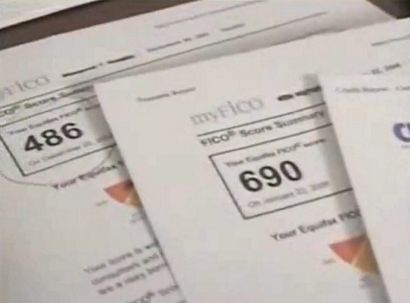 Bad credit? No problem
Car dealership slogans aside, there is good news for consumers who want a new set of wheels. According to Experian Automotive's report on the state of automotive financing from the first three months of 2012, this is what's happening:
Buyers with lower scores are getting approved. The average credit score for financing a new vehicle dropped six points to 760 and, for a used vehicle, fell four points to 659.
Lenders are making more loans. The report found that loans to car buyers with nonprime to deep subprime credit scores (from 679 to 550 and below) increased by 11.4%.
Buyers are getting bigger loans. The average loan amount for a new vehicle went up to $25,995, about $589 higher than the previous year. For a used vehicle, the average went up by $411 to $17,050.
Lenders are offering lower monthly payments. Low interest rates -- an average of 4.56% for new vehicles and 9.02% for used vehicles -- combined with longer loan terms can make payments more affordable, Zabritski says
These changes have been fueled by the fact that more consumers are paying back their loans as agreed, experts say. According to the report, the number of loan payments that were 30 days late dropped by 7.6% and those 60 days late dropped by 12.1%. In addition, vehicle repossession dropped by 37.1%. "When losses are low, lenders are able to do more lending and have better rates," Zabritski says.
Getting a good deal at any score
More loans and better interest rates, however, don't mean you'll automatically get a great deal. Experts say buyers need to take control to get the car they want at a price and interest rate they can afford. Here are some tips:
1. Know your score before you shop. Experts say it's not enough just to look at your credit report, which you can get for free from each of the major credit bureaus once a year at AnnualCreditReport.com. You also should get your credit score, which can be purchased from the credit bureaus or on myFICO.com. (According to myFICO.com, you have three separate FICO scores, one for each of the major credit bureaus.) "Make sure you know your credit score and it's very recent so they can't say, 'Oh it used to be good, but now you have a ding and this is the best we can do,'" says Rosemary Shahan, president of Consumers for Auto Reliability and Safety (CARS).
2. Check on average interest rates for your score. Check out myFICO.com's auto loan chart, which shows interest rates typically offered to consumers for each FICO score range, as well as monthly payment amounts for 36, 48 and 60-month loans at those interest rates, says Linda Sherry, director of national priorities for Consumer Action. "It's a good idea to see where you stand before you go car shopping," Sherry says. "See what you might be offered in the marketplace."
3. Don't assume your score is too low. There really is no cutoff score below which a buyer automatically won't be able to get financing, Zabritski says, noting that one lender might accept a score that another lender would not. However, the lower your score, the more you can expect to pay. Experian Automotive found that for buyers with the lowest credit scores -- below 550 -- the average interest rate on a new vehicle loan was just below 13% and, on a used vehicle loan, just below 18%, according to Zabritski.
4. If you have a low score, save up. Buyers with lower scores should save up for a bigger down payment, experts say. "Maybe you have a 550 credit score and you want a $15,000 car , but you have five grand to bring into the deal," Zabritski says. "That's a different ballgame." It's a good idea to have at least 20% of the purchase price as a down payment on a new car and 11% on a used car, recommends Ronald Montoya, consumer advice editor at Edmunds.com. "Making a high down payment is a good idea in general, but is even more important if you have poor credit," he says.
5. Shop for a loan before you go to the dealer. Check with a credit union, with your own bank and with several dealerships, Sherry says. "Don't just go straight into a dealership and get caught up in that whole wheeling dealing type of situation where you're looking at cars and they're tempting you," she says, adding that multiple hard pulls on your credit within a 30-day period while car loan shopping should only count as one inquiry -- thereby limiting any major negative impact to your score. At a dealership, never sign anything on the spot, but instead ask for the offer in writing and take it home to study, Sherry says. "If they don't want to give it to you, that's a bad sign," she says.
6. Consider a reliable used car. Experts say a used car can provide a good value for a lower price, which can be especially helpful for consumers with a lower credit score. The flip side, though, is that interest rates usually are higher for used car loans, Zabritski says. Consumers should check pricing guides to make sure they know the true value of the car they want to buy, should check the vehicle's history for free at the National Motor Vehicle Title Information System, and should have the car checked by a trusted mechanic, which can cost about $100, Shahan says. "Secondhand cars can be great deals," she says.
Whether you buy new or used, experts recommend that you keep emotion out of the transaction and take a hard look at the reliability of the car, the cost of the financing and your ability to repay the debt.
Credit Cards > Credit Card News > Go used: A new car's value will fade faster than the new-car smell
Evaluate financing when deciding new car vs. used
Remember the 40% rule: New car value fades that much in just 3 years
By Gary Foreman
The New Frugal You
Gary Foreman is a former financial planner who currently edits The Dollar Stretcher website and newsletters. He writes "New Frugal You," a weekly Q&A column about frugal living, for CreditCards.com
Ask a question.
'New Frugal You' archive

Dear New Frugal You,
My car is a really old 1999, and I have had a few problems with it. Right now, the starter has gone bad and I need to purchase one. I do not have any money saved, and I need to purchase a reliable car to get to and from work. Do you suggest I purchase a good used car from a reputable dealership? Or should I find a good deal on a new car? I need reliable transportation, a car that would last, but a price that I can afford the monthy payments. -- A. Walker
Dear A. Walker,
Oohhh, oohhh, let's get the new car! You can pick just the color you want. Bluetooth for your phone. Plus, that great new-car smell. And a warrantee. That's important, too. Yes, that's the ticket ... get the new car!
But, I suppose that, if you insist, we should take a look at some payment info. It's probably not necessary, but we'll do it just so that you can say you "checked everything out" before purchasing the new car.
The best place to start is to compare the cost of new and used wheels. For instance, a new Honda Accord coupe costs about $21,400 before tax, title and all the other dealer foolishness. A 3-year-old model will run about $12,600.
If my calculator is right, that car will lose approximately 40 percent of its value in the first three years. "Depreciation in a car's first year tends to be pretty steep," says Mark Scott with AutoTrader.com. "You pay a dealer's retail price for a new car, but as soon as you drive it off the lot, the car is only worth its wholesale price. Depreciation is actually the biggest car expense you'll incur during the first five years of owning a new car."
OK, so the most expensive drive you'll ever take is the one off the dealer's lot, but maybe the difference in payments isn't that bad. Let's check it out. A 60-month note on the new Accord will cost $465 per month. Ouch! Kinda makes that starter repair look cheap.
A similar 60-month payment on the used Honda would be $275 per month. That's funny. The payment is about 40 percent lower on the used car. The same percentage as the depreciation. We'd probably be pretty close if we assumed at the payment on any 3-year-old car would be 40 percent less than the same car new.
Maybe you should consider the used car, after all. Experts say that buying one doesn't need to be risky. You can buy a 3- or 4-year-old car and still have factory warrantee on many models.
Plus, there are a number of ways to protect yourself when buying a used car. As you suggest, you can buy it from a dealer with a known reputation. If you have a mechanic you trust, ask them to evaluate the car. Most will charge between $100 and $200 for the service, but it's money well spent. Online services, such as CarFax.com, can give you a pretty good idea if the car has been in an accident.
And, if the factory warrantee has run out, reputable dealers will offer extended warrantees (although you might do better shopping around for one after you've bought the car). Pay particular attention to the coverage for your engine and transmission. Those are the really expensive repairs.
So even if you pine for a new car, it can be unhealthy for your wallet. Sadly, even the new car smell is unhealthy!
See related: How to buy a used car
For more than 35 years, Gary Foreman has worked to help people get the most for their money. Prior to founding The Dollar Stretcher.com, he was a financial planner and purchasing manager. Gary began The Dollar Stretcher website and newsletters in April 1996. Today the website features more than 6,000 articles on different ways to live better for less. Gary has been interviewed by The Wall Street Journal, The Nightly Business Report, USA Today, Reader's Digest and other newspapers and magazines. Gary answers a question about a budgeting or saving issue from a CreditCards.com reader each week. Send your question to The New Frugal You.
